If you're living with widespread tooth loss, failing dental work or loose dentures, full arch implant rehabilitation offers a fixed solution designed to restore chewing function and natural smile aesthetics — planned digitally, and delivered with a conservative, bone-preserving approach.
Placing a dental implant is a surgical procedure, and all surgery carries risk. Possible complications include pain, swelling, bruising, bleeding and infection; injury to nearby nerves causing temporary or, rarely, permanent numbness or altered sensation of the lip, chin or tongue; sinus complications where implants are placed in the upper jaw; damage to adjacent teeth or roots; bone loss around the implant; and failure of the implant to integrate, which may require its removal, bone grafting and replacement.
Outcomes vary between individuals and are affected by bone volume and quality, gum health, medical conditions such as diabetes, medications including bisphosphonates, smoking, and how the implant is maintained afterwards. Not everyone is a suitable candidate, and some patients require preliminary procedures such as bone grafting or a sinus lift. Implant prostheses require ongoing professional maintenance, and components can wear, loosen or fracture over time and need replacement at additional cost.
This page is general information only and is not a substitute for a clinical examination. Your dentist will discuss the risks, benefits and alternatives that apply to your circumstances before you consent to treatment. You are encouraged to seek a second opinion from another appropriately qualified health practitioner.
Full arch work is the most technically demanding treatment in implant dentistry. Here's the experience behind ours.
We placed our first full arch implant case over ten years ago. That patient still attends our clinic every six months for routine maintenance and continues to enjoy a functional, healthy smile.
Our clinical team routinely performs three to five full arch implant procedures every week. That volume builds hands-on experience across a wide range of anatomical variations, bone densities and restorative setups.
Our Liverpool practice has served the local community for many years. The majority of our full arch patients come to us through direct personal referrals from existing patients.
Traditional full arch surgery often involves aggressive bone reduction — trimming away significant jawbone to create a flat ridge and hide the transition line between the prosthesis and your gums. It simplifies placement, but it permanently removes healthy bone that cannot be replaced.
We plan beyond the first ten to fifteen years. Because a full arch prosthesis typically serves well for that long before major prosthetic servicing, we ask a question before every surgery: what happens if secondary treatment is ever needed?
For patients with a high lip line, the traditional approach shaves down jawbone to hide the prosthetic margin. We take a less invasive route.
Rather than removing bone to adjust the smile line, we use conservative lip-line management and facial aesthetic techniques. By addressing muscular hypermobility around the lips, the smile line can be harmonised and the prosthetic margin masked without sacrificing structural bone.
In line with clinical evidence and regulatory standards, we do not describe implant treatment as permanent. Here is what the research actually supports.
A full arch restoration is an advanced biomechanical appliance. Much like servicing a vehicle, minor component wear or prosthetic adjustment after a decade of continuous chewing is a normal part of long-term maintenance — not treatment failure.
Three interconnected factors have to be monitored and balanced to maximise the lifespan of your implants and prosthesis.
Your systemic health, bone density, healing response and lifestyle choices — non-smoking status among them.
Disciplined daily cleaning at home, combined with professional bi-annual check-ups and hygiene maintenance.
Managing bite forces, grinding (bruxism) and jaw joint movement so heavy forces distribute evenly across the framework.
Many full arch providers fit one solid bridge structure. We offer a specialised alternative that is rarely executed in general practice because of its technical complexity.
A full arch restoration milled from one continuous block of material. It functions well, but the design has a consequence worth understanding before you choose it.
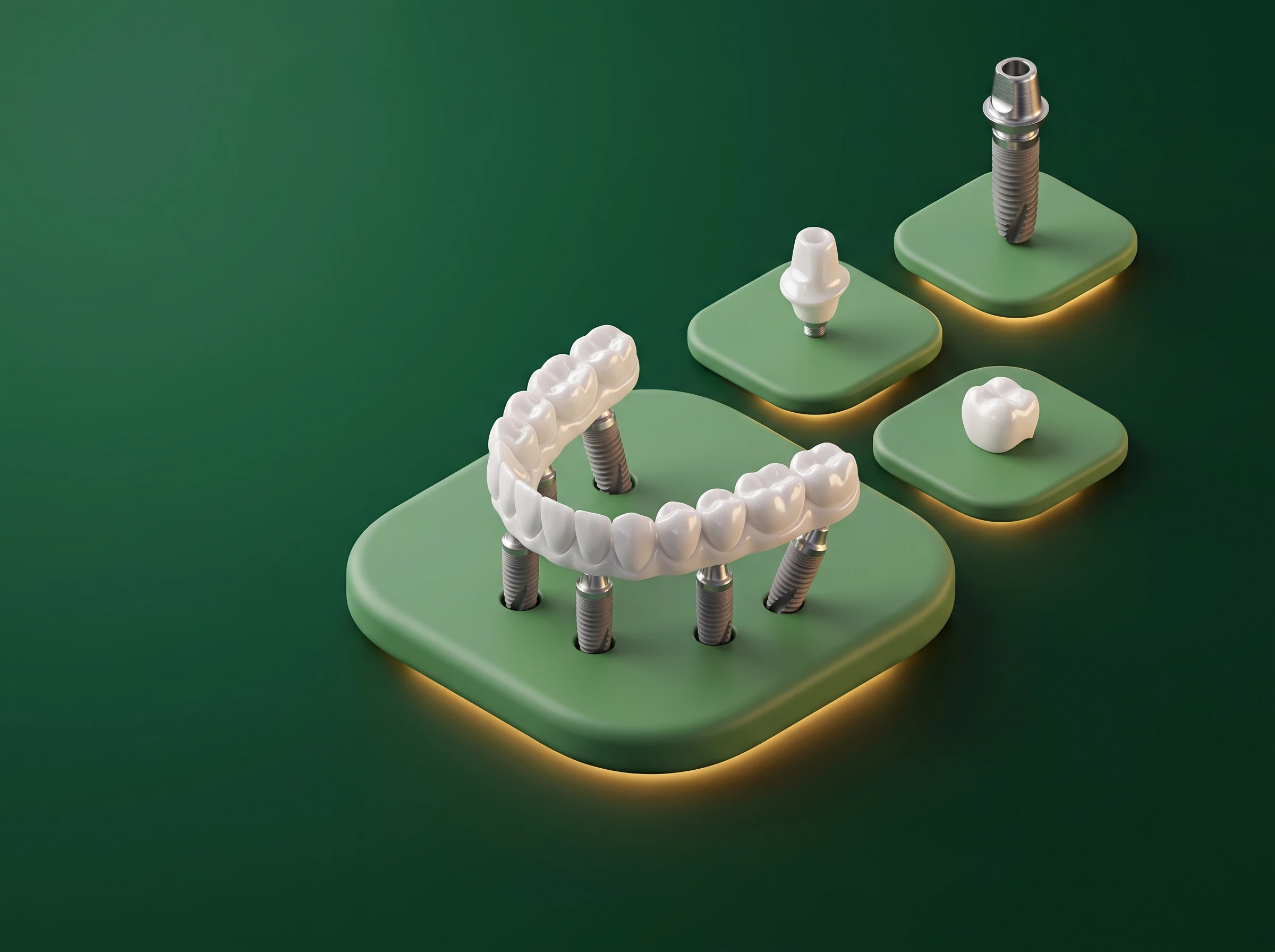
A custom-milled titanium framework built with individual abutment studs engineered for each tooth position. Individual zirconia crowns are then crafted and cemented onto each stud.
Modern digital workflows and dedicated dental laboratory facilities, from the first scan through to final fit.
Multi-axis milling technology produces custom high-grade titanium frameworks engineered for micron-level precision and passive fit across the implants.
Used to produce accurate diagnostic models, anatomical prototypes and surgical guides for precise implant placement.
Selected for flexural strength, wear resistance and a translucency that mimics natural tooth enamel.
Pink composite and ceramic gum materials engineered to replicate natural gingival tone and contour, for a seamless transition between teeth and gums.
Our clinicians work directly with technicians across our clinical and laboratory infrastructure, which keeps quality control consistent from the initial digital scan through to the final fit.
So you know what happens next at every point in your treatment.
We assess bone structure, facial aesthetics and medical history using high-resolution 3D CBCT imaging and intraoral digital scanning.
Under local anaesthesia or sedation, implants are placed using conservative, bone-preserving protocols.
Where clinically appropriate, a temporary bridge lets you smile, speak and eat soft foods while the implants integrate.
Once integration and tissue healing are complete, your titanium-and-zirconia prosthesis with individual crowns is fitted.
You join our structured preventive program — six-monthly evaluations, hygiene maintenance and bite adjustments.
Upfront pricing, with what's included stated plainly.
Full arch implant rehabilitation at our practice typically starts around $20,000 per arch, or $40,000 for a full mouth where both the upper and lower arches are restored. We believe in transparent, upfront pricing with no hidden surprises.
Your individual fee depends on your clinical presentation and is confirmed in writing after your 3D consultation.
Full arch treatment is staged over several appointments, and payment is staged the same way. You pay for each appointment as you reach it, rather than the whole fee upfront.
An itemised plan and fee, confirmed before treatment begins.
Each appointment is paid separately for the work completed at it.
We also partner with Zip, Humm, TLC, SuperCare and DentiCare.
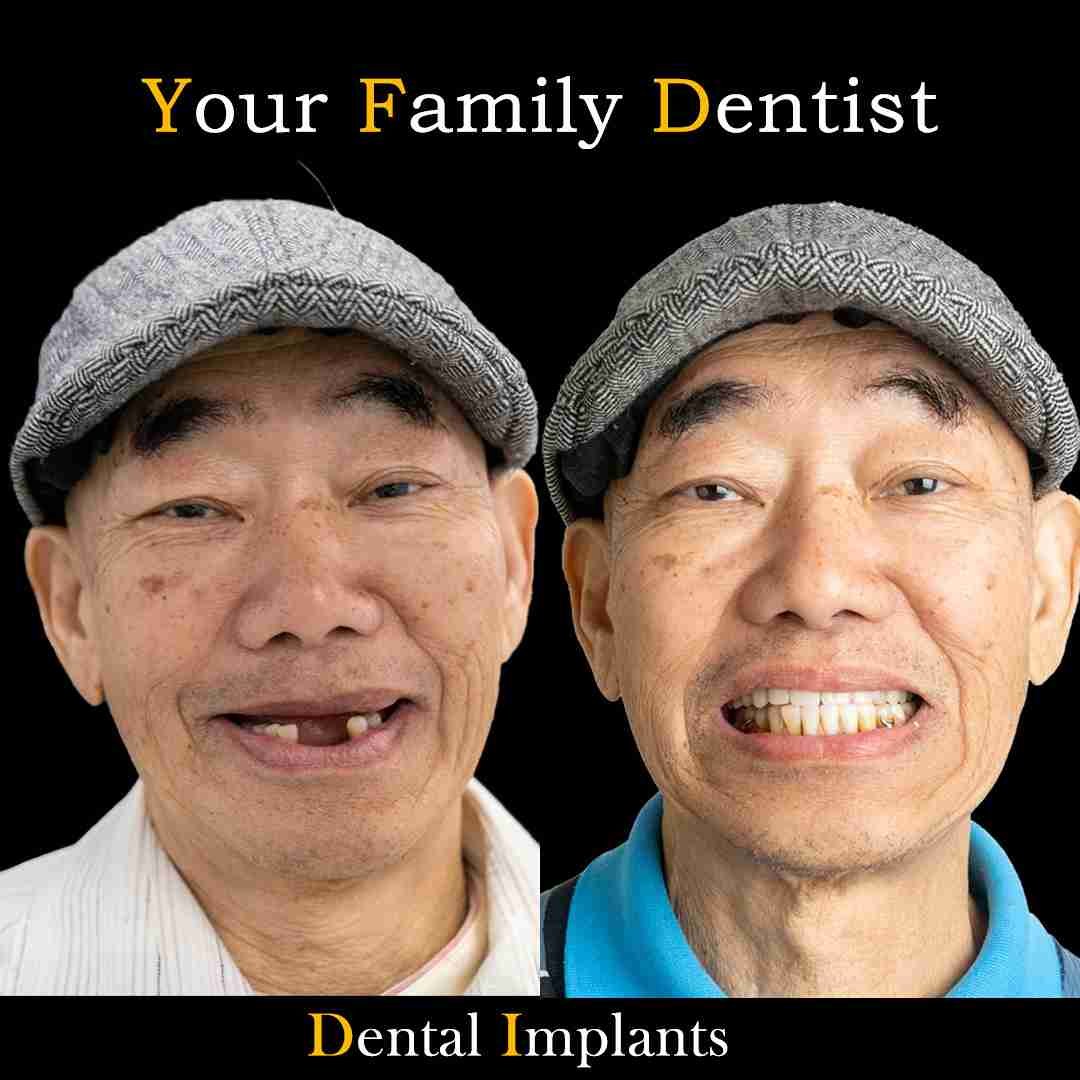
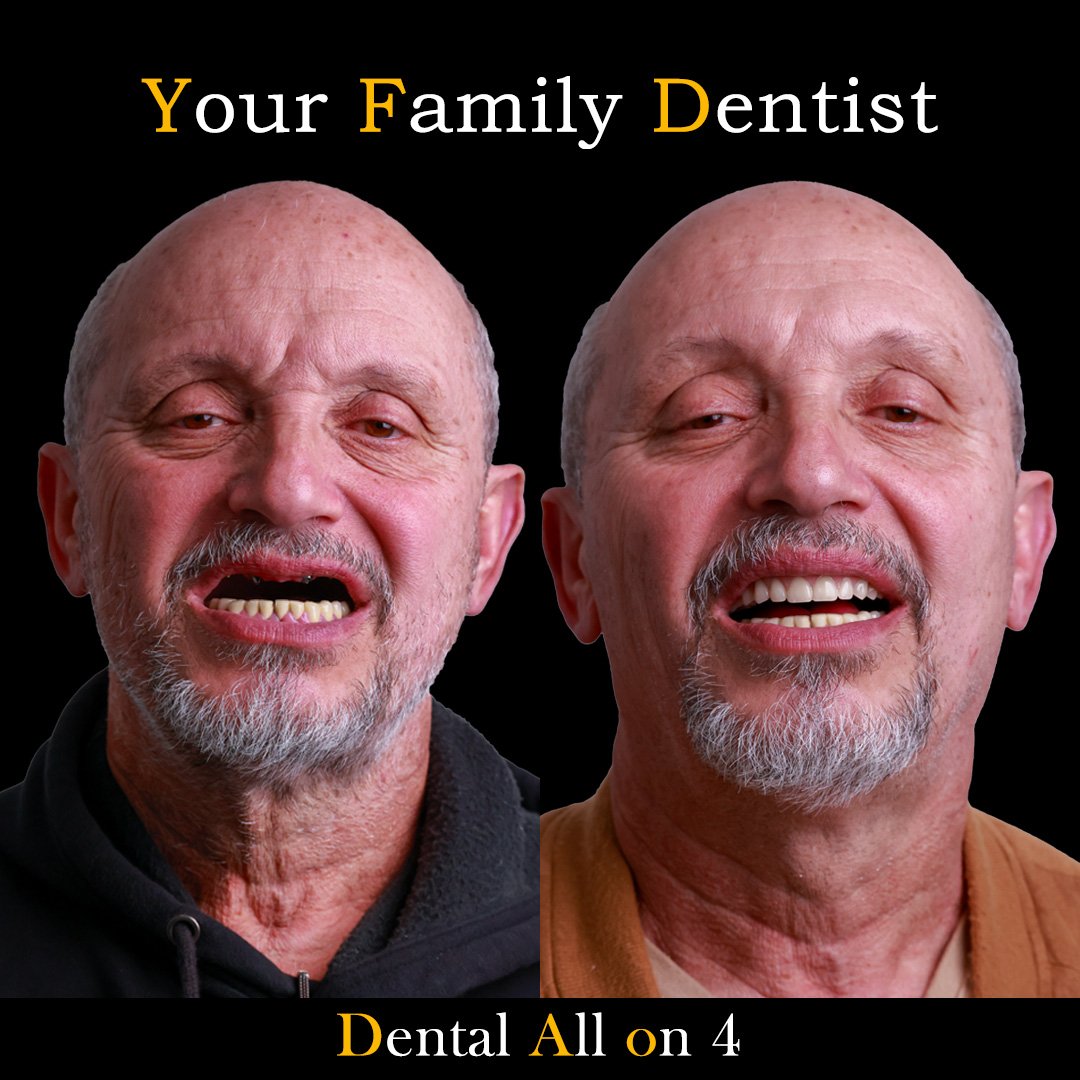
Documented cases from our Liverpool practice, photographed under standardised conditions.
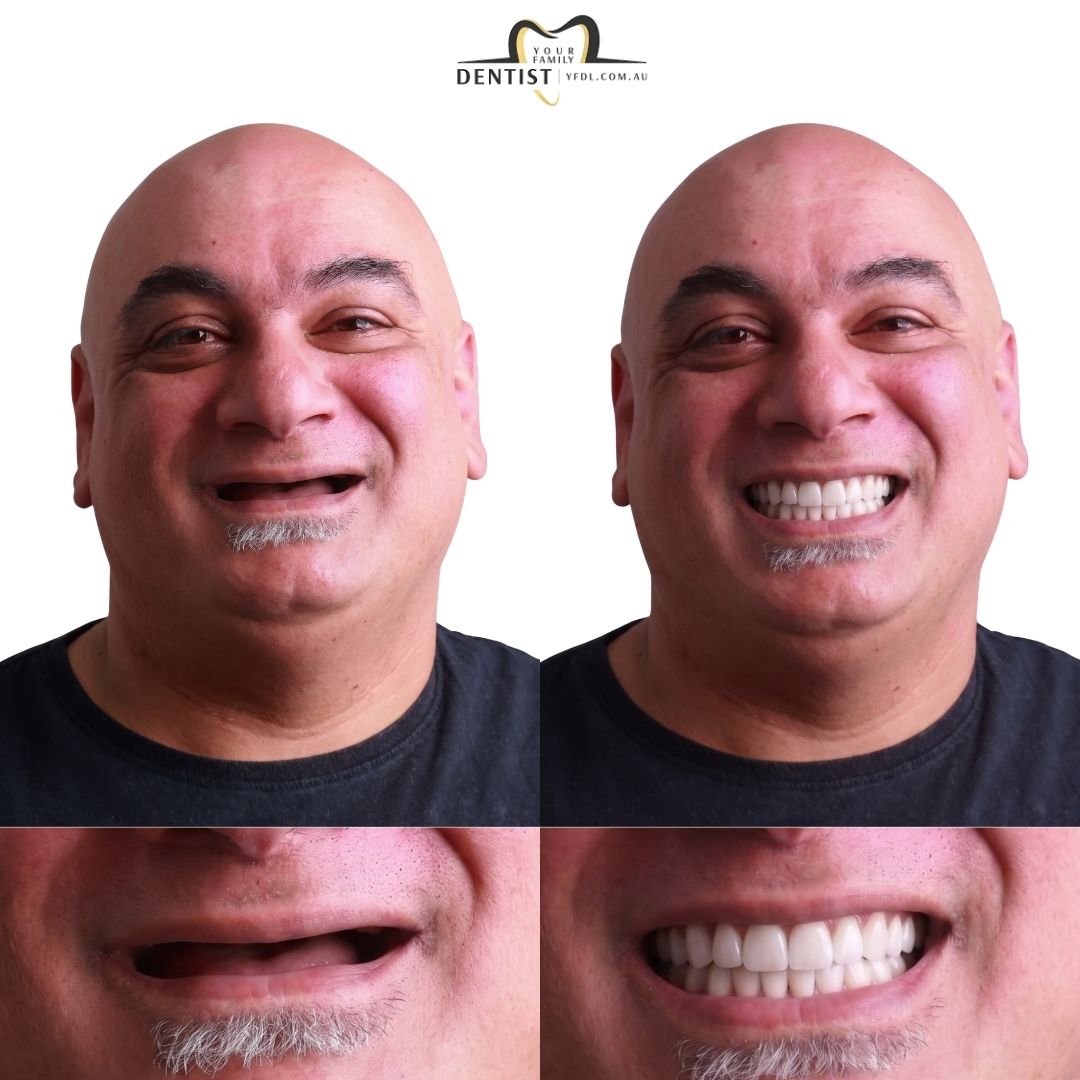
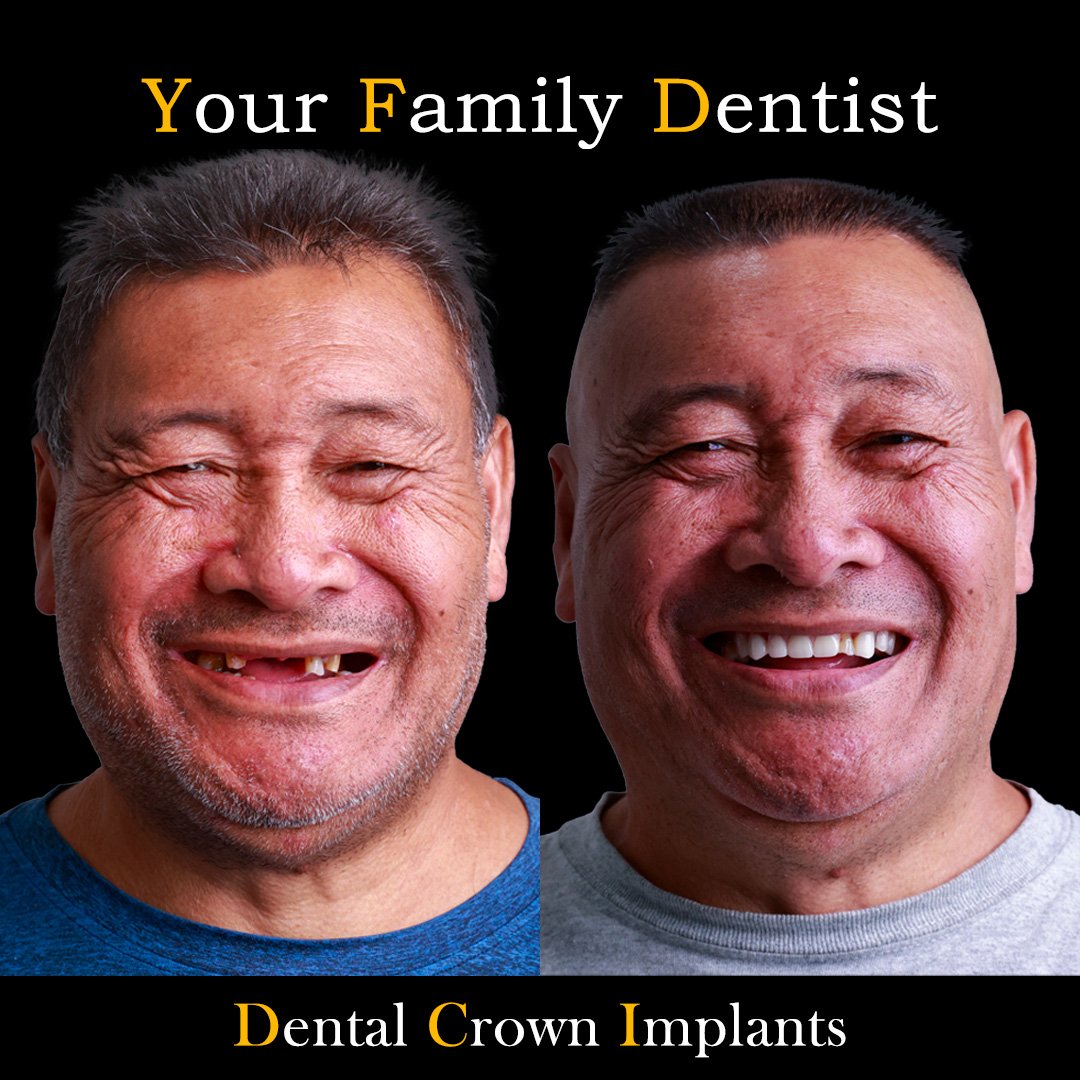
Please note: Individual treatment outcomes vary based on clinical factors. Images are published with documented patient consent and depict specific clinical cases; they are not a prediction of the result any individual patient will achieve.
Full arch treatment is a significant decision — clinically, financially and personally. Our role is to make sure you understand it fully before you commit to it.
That means an honest account of what the evidence supports, a written fee before treatment starts, a surgical approach that protects your bone for the future, and a prosthetic design that can be maintained tooth by tooth rather than replaced whole.
It also means telling you plainly if full arch implants aren't the right treatment for your circumstances.
Book Your 3D Consultation
Full arch implant rehabilitation at our practice typically starts around $20,000 per arch, or $40,000 for a full mouth where both arches are restored. We believe in transparent, upfront pricing with no hidden surprises. That investment includes pre-surgical planning, necessary tooth extractions, surgical implant placement, your provisional prosthesis, and your final custom-engineered prosthesis featuring a titanium framework with individual Dentsply Sirona zirconia crowns.
In dental medicine, no restoration is considered permanent. With proper care and routine servicing, an implant prosthesis is engineered for long-term function. On average a well-maintained prosthesis serves well for 10 to 15 years before standard prosthetic updates or minor maintenance may be required. Clinical literature indicates that under optimal conditions, around 50% to 60% of cases can last up to 30 years.
Many practices fit a restoration made from a single continuous block of material. While functional, if one tooth chips the entire bridge often needs to be removed or replaced. We use a custom-milled titanium framework with individual tooth studs and individual zirconia crowns cemented onto each stud. If a tooth is damaged after years of heavy chewing, we can repair or replace that single crown individually.
Traditional techniques often trim away significant jawbone to flatten the ridge and hide the prosthetic gum line. We prefer a conservative approach that preserves your natural bone structure. Preserving bone leaves a stronger anatomical foundation for the future, improves long-term predictability if secondary procedures are ever needed in 10 to 15 years, and minimises surgical trauma.
Patient comfort is a priority. Surgical placement is performed under local anaesthesia, with sedation options available for anxious patients. After surgery, mild to moderate swelling, bruising and discomfort are normal parts of the healing response and are typically well managed with prescribed or recommended pain management protocols.
Long-term success depends heavily on daily home hygiene and regular professional check-ups. Daily cleaning requires specialised tools such as water flossers, super floss and interdental brushes to clean beneath the bridge and around the implant posts. Bi-annual visits allow us to inspect implant integration, check bite balance and perform professional cleaning.
Most adults with missing teeth, severe periodontal disease or failing dental work can be evaluated for full arch implants. Key considerations include adequate bone quantity and quality assessed via 3D CBCT scan, controlled systemic health such as managed diabetes, non-smoking status, and balanced jaw mechanics (TMJ health).
Any surgical or invasive procedure carries risks. These include infection, delayed bone integration, nerve irritation causing temporary or permanent numbness, sinus involvement, swelling, or implant failure requiring removal or bone grafting. Before proceeding, you should seek a second opinion from an appropriately qualified health practitioner to determine whether full arch implant treatment is suitable for your individual circumstances.
Any surgical or invasive procedure carries risks. Full arch dental implant treatment may involve infection, delayed bone integration, nerve irritation causing temporary or permanent numbness, sinus involvement, swelling, bruising, or implant failure requiring removal or bone grafting.
Before proceeding, we recommend you seek a second opinion from an appropriately qualified health practitioner to determine whether this treatment is suitable for your individual circumstances. Individual treatment outcomes vary based on clinical factors, and results cannot be guaranteed.
Take the first step with our clinical team at Your Family Dentist Liverpool — a comprehensive 3D full arch implant evaluation, with your options and fees explained in writing.
The complimentary initial consultation is available to new patients and includes a visual examination and a discussion of your treatment options with a dentist. It does not include radiographs (X-rays), OPG or CBCT imaging, clinical photographs, diagnostic records, scale and clean, or any treatment — these are charged at our standard fees, which will be quoted to you in writing before anything is carried out. One consultation per person. Attending a consultation carries no obligation to proceed with treatment. Bookings are subject to practitioner availability. This offer applies until withdrawn, and notice of withdrawal will be published on this page.
All dental treatment carries risks. Information on this website is general in nature, is not a substitute for a clinical examination, and does not take your individual circumstances into account. Individual results vary. Any prices shown are indicative and will be confirmed in a written treatment plan following examination. You are encouraged to seek a second opinion from another appropriately qualified health practitioner before proceeding with treatment.