Painful, impacted or troublesome wisdom teeth? Surgical removal is available with on-site sedation, flexible payment plans, and a caring team that makes the whole experience comfortable and stress-free.
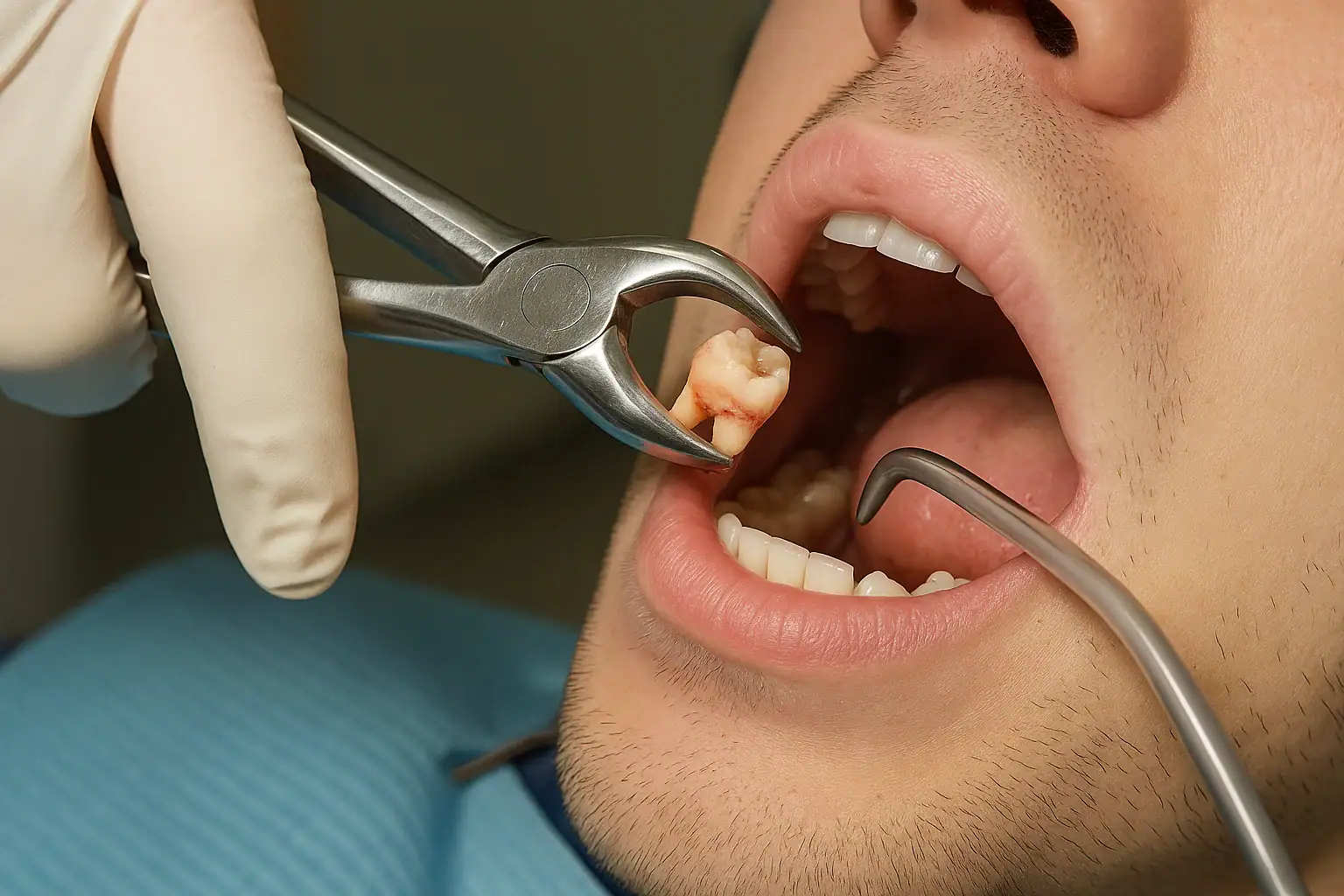
Surgical removal of a wisdom tooth is a surgical procedure carried out under local anaesthetic, sedation or general anaesthetic. Possible complications include pain, swelling, bruising, bleeding, infection, dry socket, restricted jaw opening, damage to adjacent teeth or fillings, and injury to the inferior alveolar or lingual nerve, which may cause temporary or, rarely, permanent altered sensation or numbness of the lip, chin or tongue.
Sedation and general anaesthesia carry their own risks, which will be explained to you separately by the practitioner administering them. Recovery times vary between individuals; most people require several days of reduced activity.
Not all wisdom teeth require removal. Monitoring an asymptomatic tooth is sometimes the appropriate course, and your dentist will discuss whether that applies to you. Your dentist will explain the risks specific to your case before you consent to treatment. You are encouraged to seek a second opinion from another appropriately qualified health practitioner.
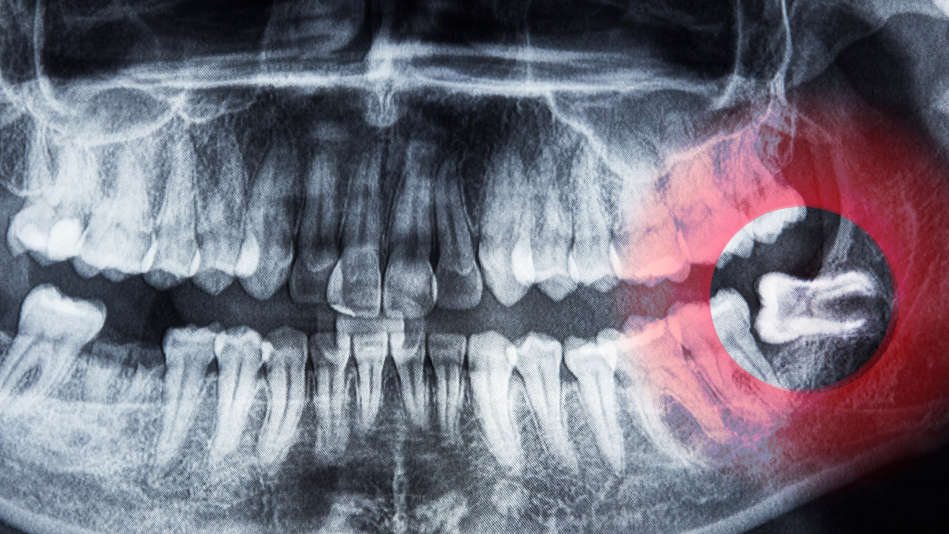
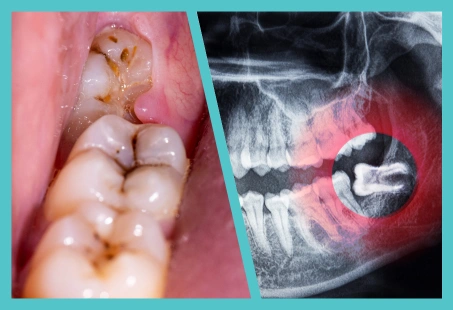
The wisdom tooth is the last tooth to grow in your mouth. When it doesn’t have enough space to come through properly, it can become impacted and infected — a very painful problem. In most cases, the only effective treatment for an impacted wisdom tooth is extraction.
If you live in Sydney and are looking for the right place for wisdom tooth extraction, Your Family Dentist may be a suitable option for you — combining careful clinical technique with a focus on comfort.
Wisdom teeth, also known as third molars, are the last teeth to erupt — typically appearing between the ages of 17 and 25. They come through behind your second molars and can cause issues due to lack of space or improper positioning.
Because they’re so far back and hard to clean, wisdom teeth can trap food and bacteria — leading to infections or gum disease if they don’t fully emerge or become impacted.
The human jaw has shrunk over time due to dietary changes. Wisdom teeth, once vital for grinding tough foods, are often no longer needed.
Most people have four — one in each corner of the mouth. But it’s possible to have fewer, more, or none at all.
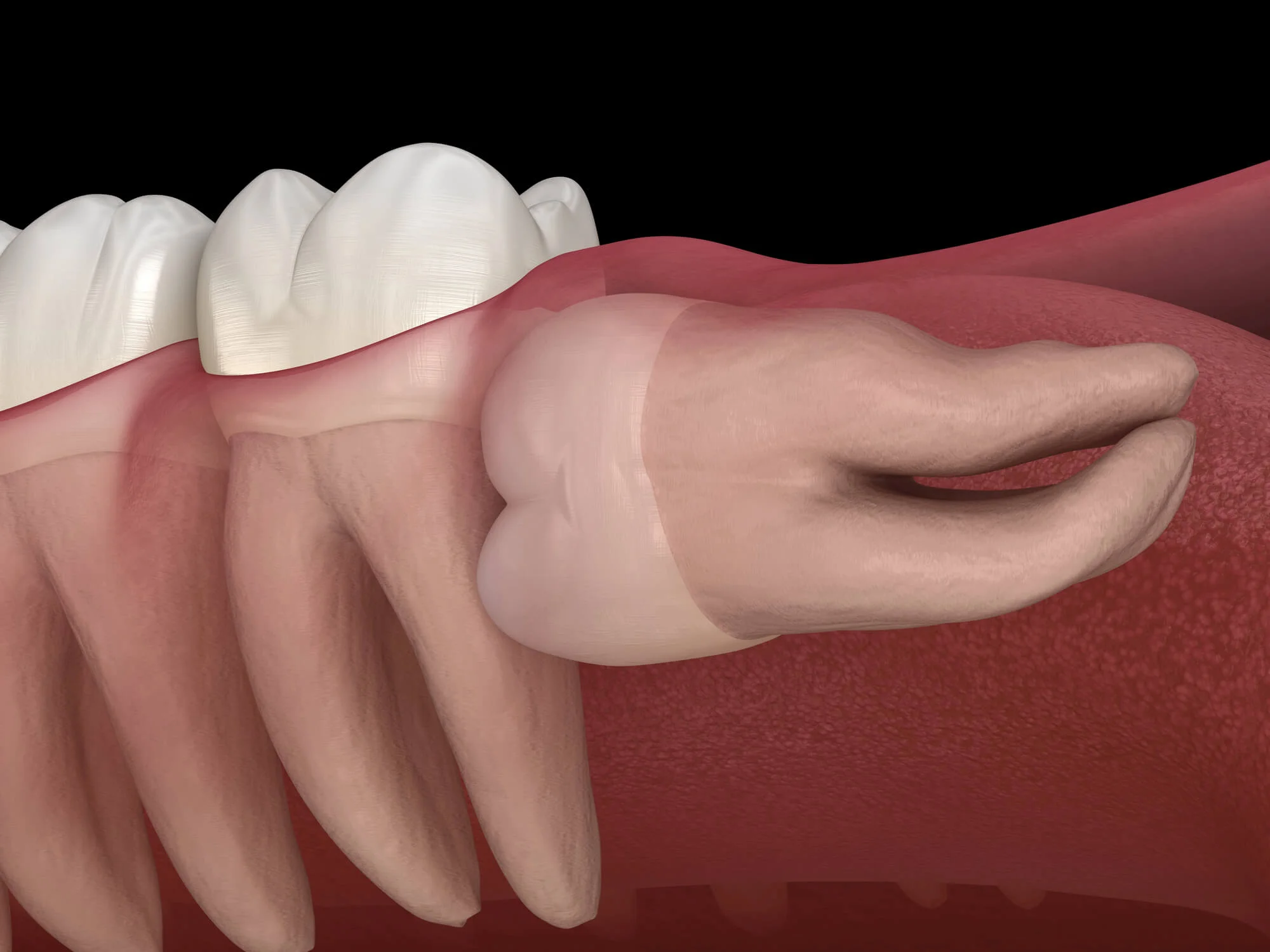
Wisdom teeth may erupt normally, partially erupt, or stay completely impacted under the gum or bone.
Each type angles differently — and each has its own extraction approach.
Eruption is blocked by bone tissue.
Angled forward, towards the front teeth.
Angled backward, towards the back of the mouth.
Lies flat in the jawbone.
Not sure if your wisdom tooth needs to come out? Watch for these warning signs:
If you notice several of these, it’s time to consider a wisdom tooth extraction. Experiencing discomfort? Book your consultation and get rid of the distress.
A calm, guided process — we only proceed when you’re completely ready.
We examine your teeth and assess the condition of your wisdom tooth.
Imaging helps us plan the safest, most effective way to extract.
You’re completely numbed (with sedation options) for total comfort.
We only proceed once you’ve agreed and feel completely ready.
Proper brushing and flossing helps prevent gum disease and infection around wisdom teeth.
Routine exams and X-rays let us monitor development and catch problems early.
If we spot potential issues, acting early helps prevent future complications.
Our team is led by Dr Shaveta Bhayani and Dr Nick Bhayani, with a combined 25 years of experience in general and restorative dentistry. We pair careful clinical practice with a gentle, unhurried approach.
With on-site IV and conscious sedation, flexible payment plans, and a warm, reassuring team, we make even wisdom tooth removal a comfortable, worry-free experience.
Book Your Consultation
We have cared for families across Liverpool and Blacktown since 2014. Feedback from our patients is published independently on our Google Business Profile, where you can read it in full and leave your own.
Read Our Google ReviewsWisdom teeth, or third molars, are the last teeth to erupt — usually between ages 17 and 25. Due to limited space, they can become impacted, causing pain, swelling or infection.
Common signs include swollen gums, jaw pain, difficulty chewing, bad breath and an unpleasant taste. If you experience several of these symptoms, an extraction may be necessary.
Impacted wisdom teeth can be vertical, mesioangular (angled forward), distoangular (angled backward) or horizontal (lying flat) — each with unique extraction challenges.
Regular dental checkups, good oral hygiene and early intervention if advised by your dentist can help manage or prevent wisdom tooth issues.
With local anaesthetic and, where appropriate, IV sedation, most patients are comfortable during the procedure. Some pain, swelling and bruising afterwards is normal and varies between individuals; your dentist will discuss pain relief with you. Sedation carries its own risks, which will be explained before you consent.
Your initial wisdom tooth consultation is complimentary for new patients at our Liverpool & Blacktown clinics. Terms apply — see below.
The complimentary initial consultation is available to new patients and includes a visual examination and a discussion of your treatment options with a dentist. It does not include radiographs (X-rays), OPG or CBCT imaging, clinical photographs, diagnostic records, scale and clean, or any treatment — these are charged at our standard fees, which will be quoted to you in writing before anything is carried out. One consultation per person. Attending a consultation carries no obligation to proceed with treatment. Bookings are subject to practitioner availability. This offer applies until withdrawn, and notice of withdrawal will be published on this page.
All dental treatment carries risks. Information on this website is general in nature, is not a substitute for a clinical examination, and does not take your individual circumstances into account. Individual results vary. Any prices shown are indicative and will be confirmed in a written treatment plan following examination. You are encouraged to seek a second opinion from another appropriately qualified health practitioner before proceeding with treatment.