Replace an entire jaw of missing, failing or loose teeth with a fixed set of teeth supported by four implants — so you can eat, speak and smile without a denture ever moving again.
Placing a dental implant is a surgical procedure, and all surgery carries risk. Possible complications include pain, swelling, bruising, bleeding and infection; injury to nearby nerves causing temporary or, rarely, permanent numbness or altered sensation of the lip, chin or tongue; sinus complications where implants are placed in the upper jaw; damage to adjacent teeth or roots; bone loss around the implant; and failure of the implant to integrate, which may require its removal, bone grafting and replacement.
Outcomes vary between individuals and are affected by bone volume and quality, gum health, medical conditions such as diabetes, medications including bisphosphonates, smoking, and how the implant is maintained afterwards. Not everyone is a suitable candidate, and some patients require preliminary procedures such as bone grafting or a sinus lift. Implant prostheses require ongoing professional maintenance, and components can wear, loosen or fracture over time and need replacement at additional cost.
This page is general information only and is not a substitute for a clinical examination. Your dentist will discuss the risks, benefits and alternatives that apply to your circumstances before you consent to treatment. You are encouraged to seek a second opinion from another appropriately qualified health practitioner.
Most of our full arch patients arrive after years of putting up with one or more of these.
Your denture slips when you eat or talk, and adhesive has stopped being enough to hold it steady.
Steak, apples, corn and crusty bread have quietly disappeared from your diet over the years.
Several teeth are cracked, loose or heavily decayed, and patching them one by one is no longer sensible.
Periodontal disease has loosened the teeth across an entire arch and the bone underneath is receding.
Bone loss after tooth loss is shortening your lower face and adding years to your appearance.
You cover your mouth in photos, or avoid them entirely, and it's started to affect your confidence.
All-on-4 is the treatment most full arch patients receive. Four implants per jaw — two placed straight at the front, two angled at the back — support a complete fixed bridge of teeth. Angling the rear implants makes use of the denser bone that's usually still available, which often avoids the need for bone grafting altogether.
Fewer implants means less surgery, a shorter treatment timeline and a considerably lower cost than replacing every tooth individually.
Some arches benefit from more than four implants. Where bone volume is generous, where the bite force is unusually heavy, or where a longer bridge needs extra support, we may plan six or more implants across the arch instead.
This isn't an upgrade you choose from a menu — it's a clinical judgement made from your CT scan and bite assessment. We'll explain which configuration suits your jaw, and why, before any treatment begins.
Full arch work leaves little room for approximation. Every implant has to land in the bone that can carry it, at the angle the final bridge requires. We plan each case with 3D CT imaging and computer-guided placement, so the position of every implant is decided before the day of surgery rather than during it.
Guided placement is also gentler. Less exploratory opening of the gum means less swelling afterwards and a more comfortable recovery.
An honest comparison of the three usual options for replacing a full jaw of teeth.
| Full Arch Implants | Conventional Dentures | Individual Implants | |
|---|---|---|---|
| Fixed in the mouth | Yes — never removed | No — removed daily | Yes |
| Implants needed per jaw | 4 to 6 | None | One per tooth |
| Chewing strength | Close to natural teeth | Noticeably reduced | Close to natural teeth |
| Helps preserve jawbone | Yes | No | Yes |
| Covers the palate | No | Usually, on upper | No |
| Typical cost | $20,000 per jaw $40,000 full mouth | Lowest upfront | Highest |
| Daily maintenance | Brush & clean underneath | Remove, soak, adhesive | Brush & floss as normal |
Which option suits you depends on your bone volume, gum health, bite and general health. We'll talk all three through at your consultation.
Five clear stages, so you always know what happens next.
We examine your mouth, take a 3D CT scan and talk through what's realistic for your jaw.
Your implant positions and new teeth are designed on screen before anything is placed.
Implants are placed under anaesthetic using a surgical guide built from your scan.
The implants integrate with your bone while we review your progress at set intervals.
Your definitive bridge is fitted, adjusted to your bite and polished for the finish.
Clear figures, and a way to spread them across your treatment rather than paying it all at the start.
Full arch treatment is staged over several appointments, and so is your payment. We break the treatment into clear stages and you pay for each appointment as you reach it — no lump sum at the start, no surprises along the way.
You receive an itemised plan before treatment starts, with no hidden extras.
Each appointment is paid separately, for the work done at that appointment.
We also partner with Zip, Humm, TLC, SuperCare and DentiCare if you'd prefer.
Fees quoted are for standard All-on-4 treatment — $20,000 per jaw, $40,000 for a full mouth. Additional procedures such as extractions, bone grafting or sinus lifts are quoted separately after your assessment. Individual treatment outcomes vary based on clinical factors.
Full arch treatment is the most demanding work in implant dentistry. It's led here by Dr Shaveta Bhayani and Dr Nick Bhayani, with a combined 25 years of experience and patients who travel from across Australia.
Everything happens under one roof — the CT scan, the planning, the surgery and the final bridge. There's no referring you out mid-treatment and no gap between the person who planned your case and the person who delivers it.
We'll also tell you plainly if full arch implants aren't the right answer for your mouth. A treatment that doesn't suit you helps nobody.
Book Your Consultation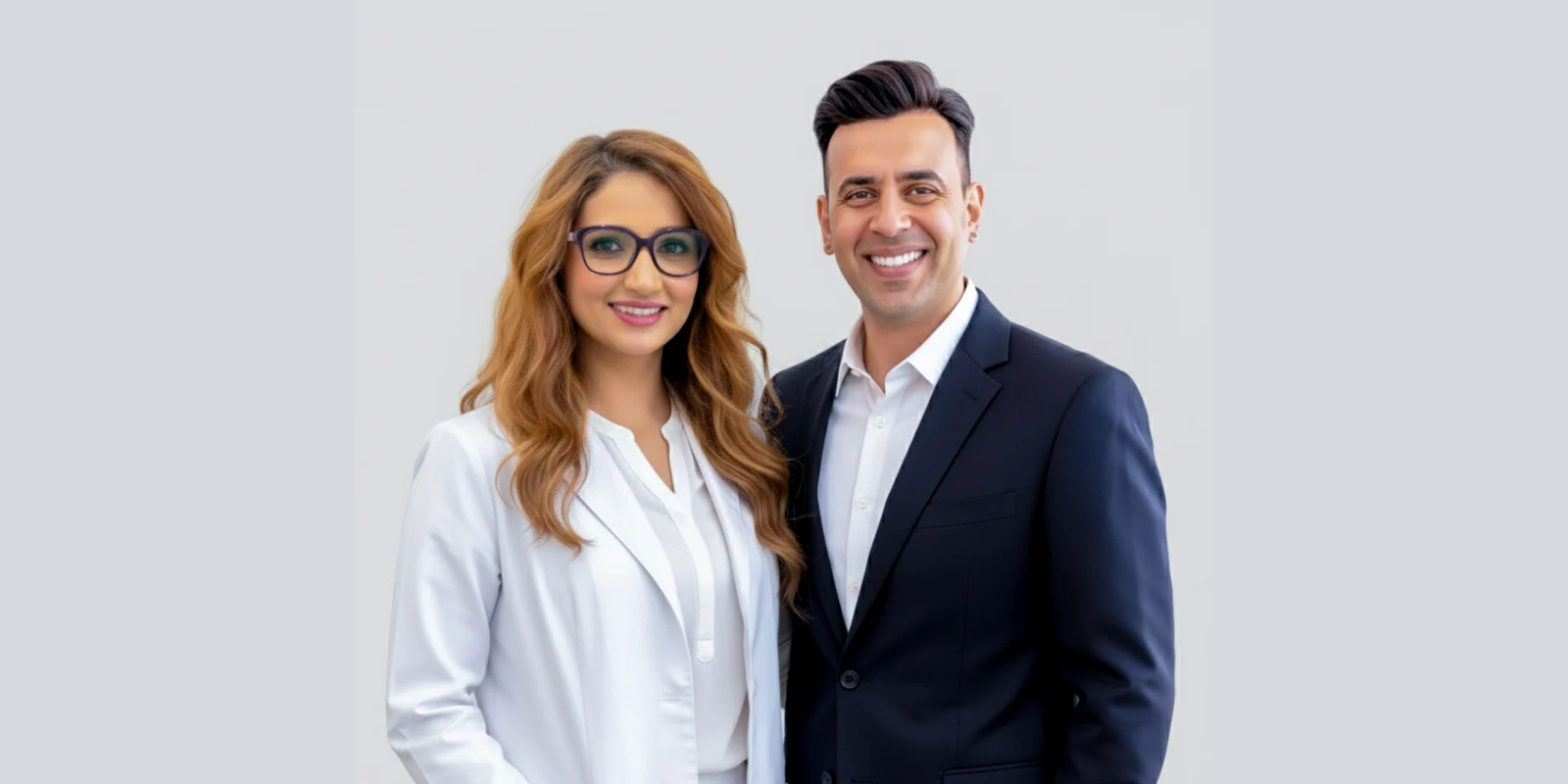
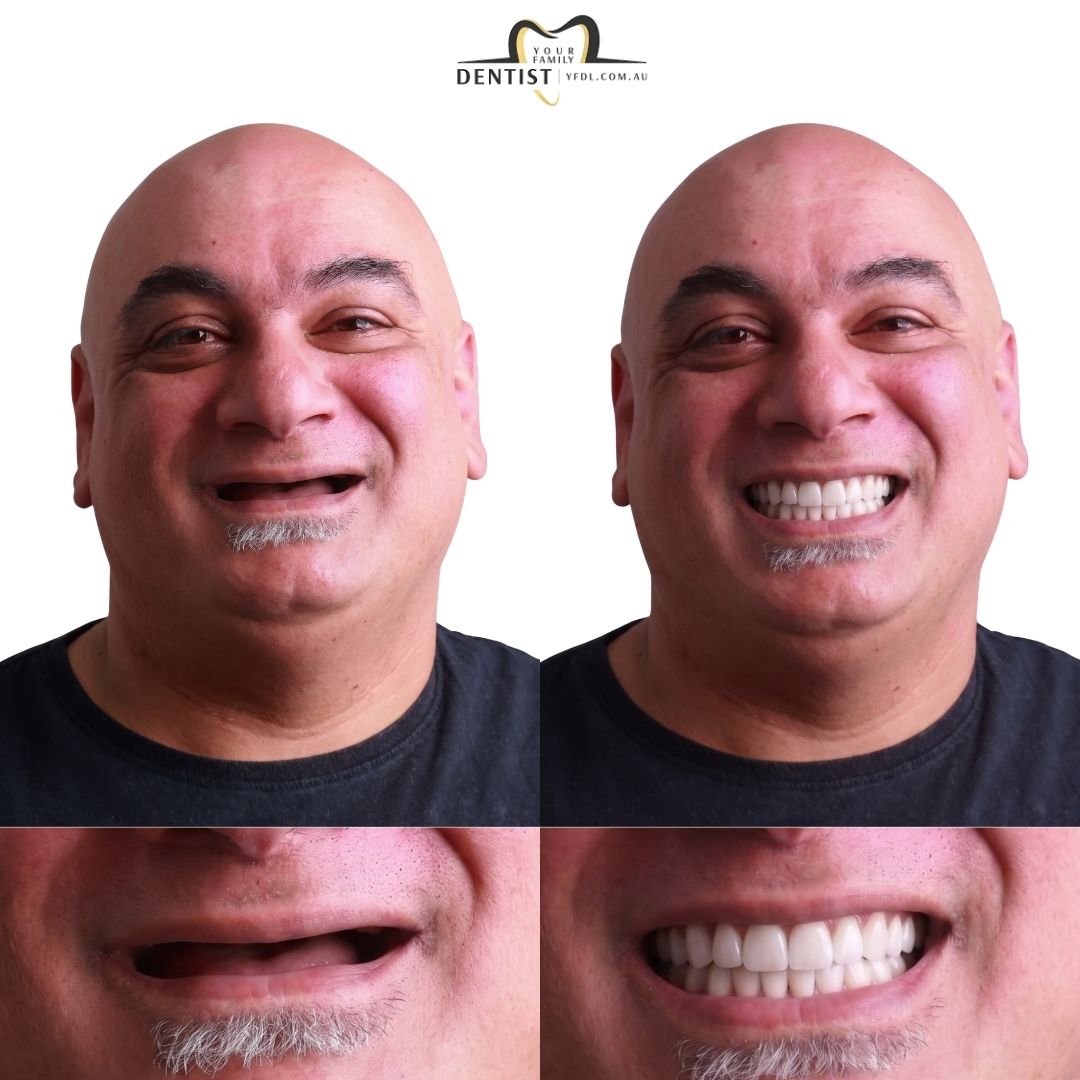
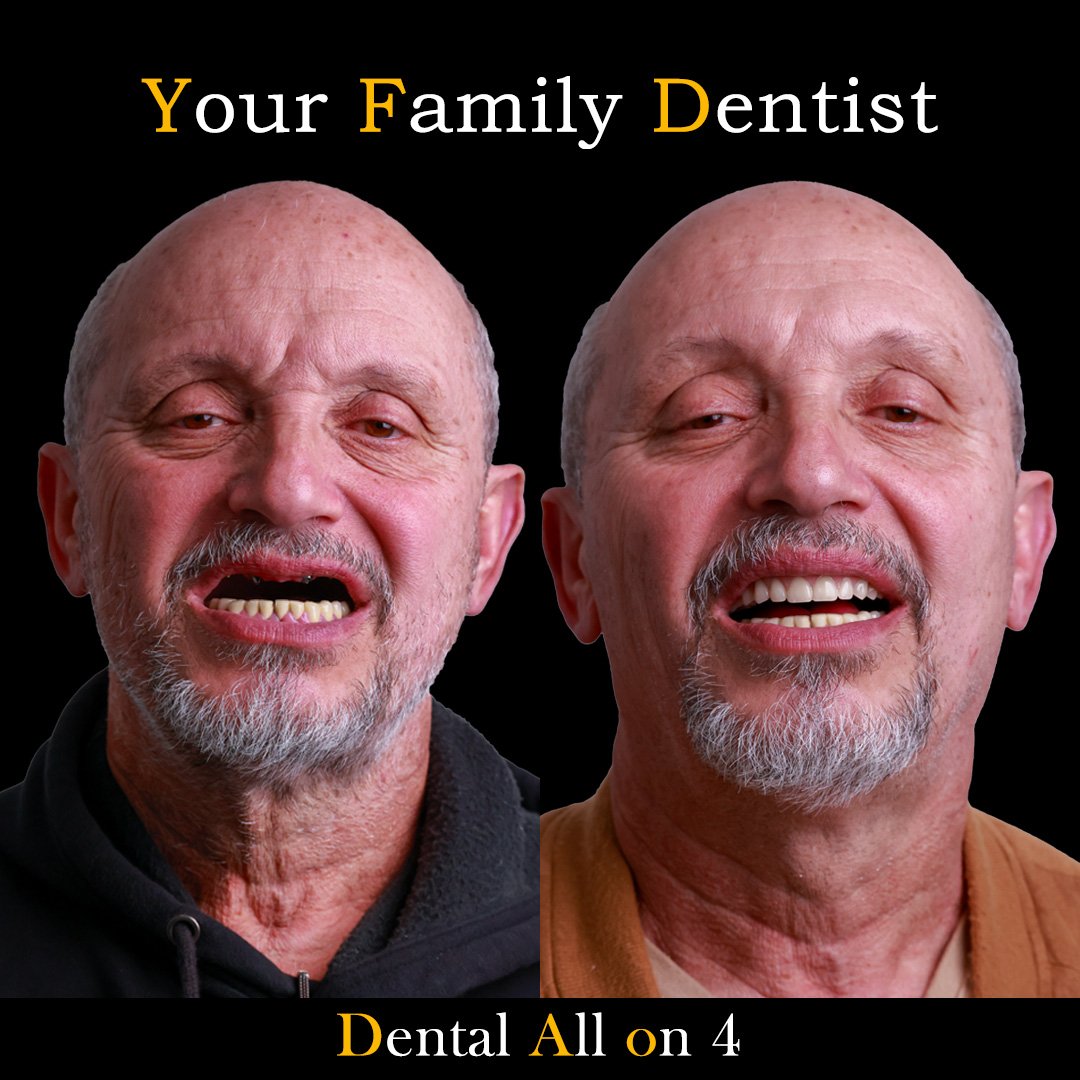
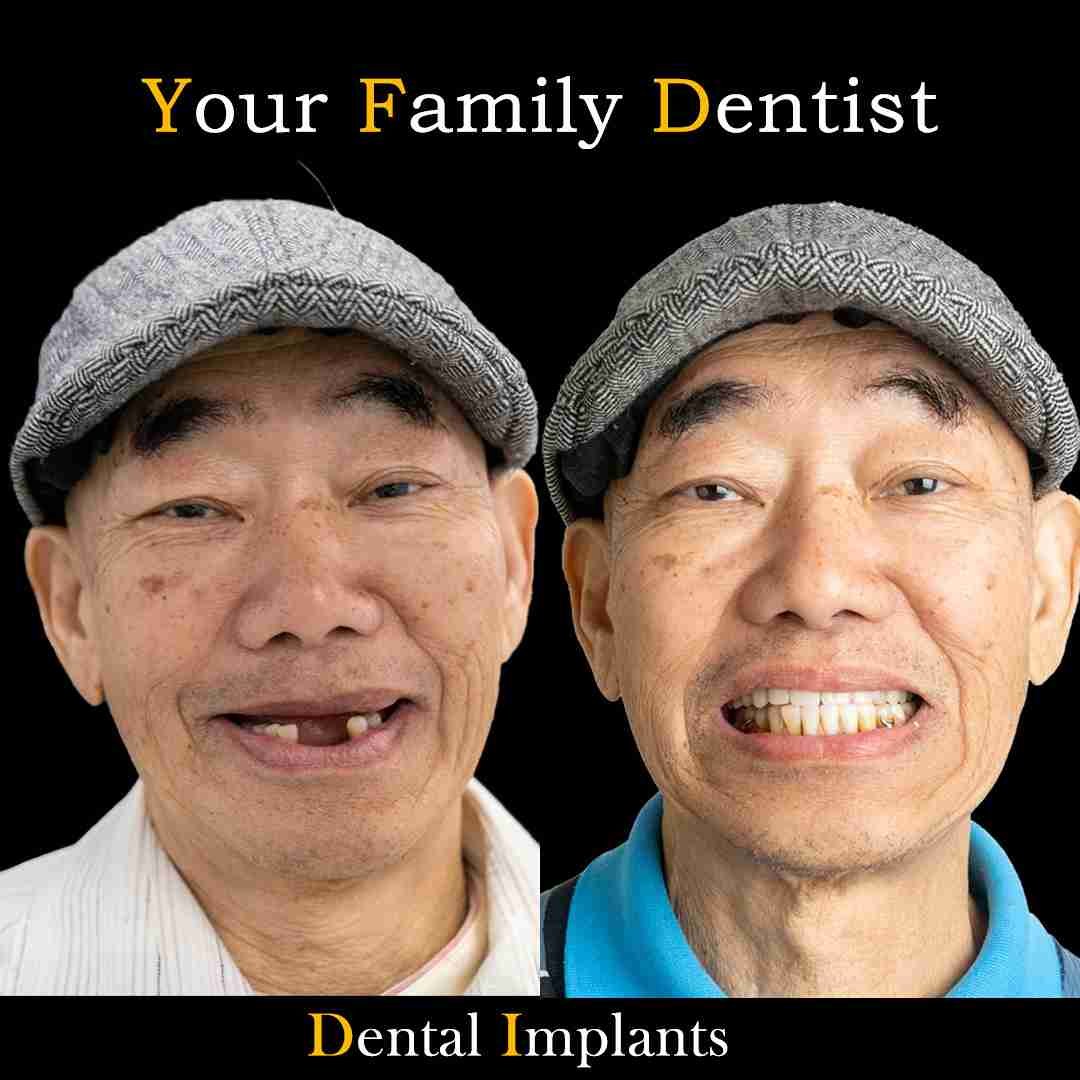
Results from full arch implant treatment at our Liverpool & Blacktown clinics.
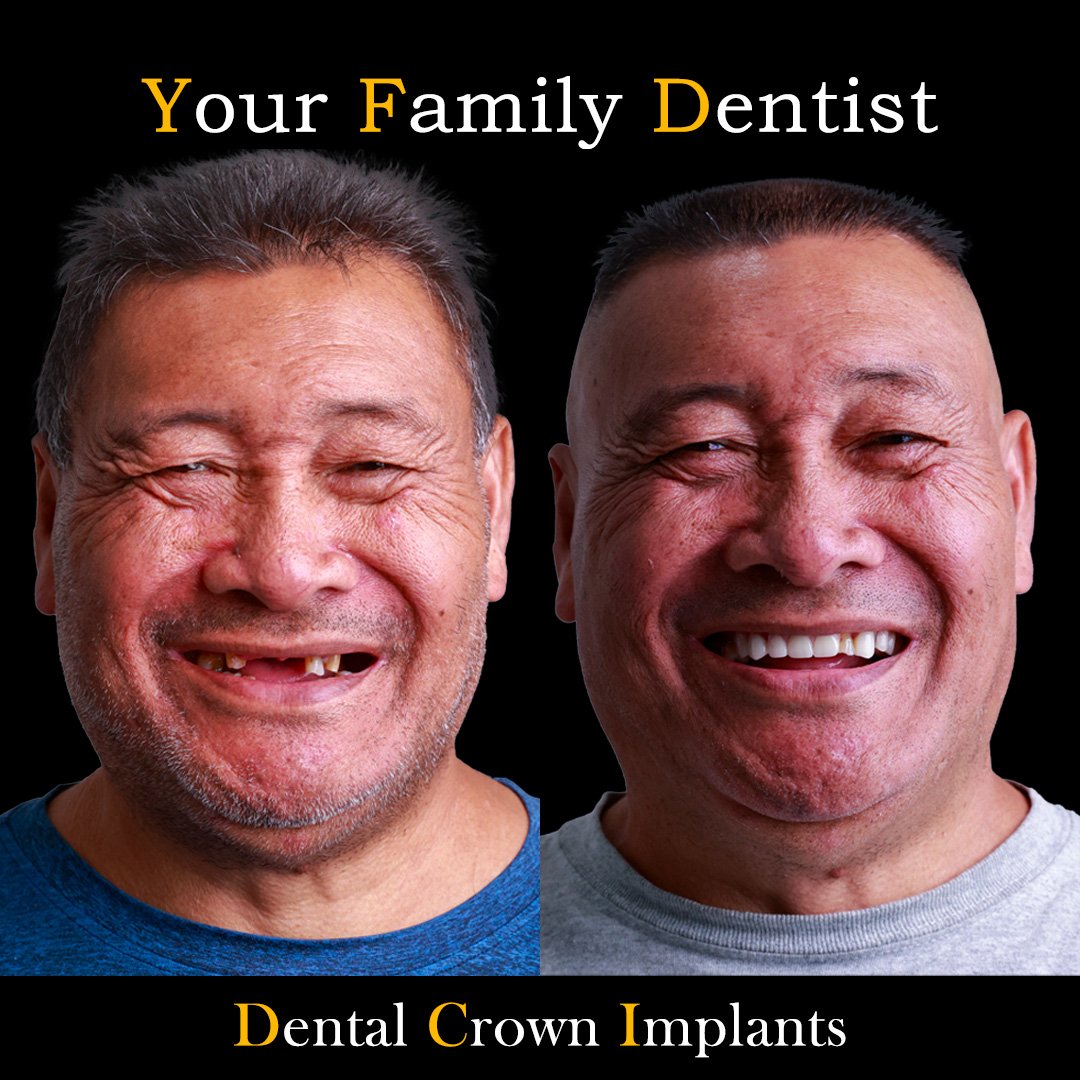
Disclaimer: Individual treatment outcomes vary based on clinical factors.
We have cared for families across Liverpool and Blacktown since 2014. Feedback from our patients is published independently on our Google Business Profile, where you can read it in full and leave your own.
Read Our Google ReviewsOur All-on-4 full arch treatment is $20,000 per jaw, or $40,000 for a full mouth with both the upper and lower jaws restored. That includes the implants, abutments and the fixed bridge. Additional procedures such as extractions, bone grafting or sinus lifts are quoted separately after your assessment. Our in-house payment plan lets you pay per appointment as you go.
No. The bridge is fixed to the implants and stays in your mouth — you don't take it out at night. You clean it in place, including underneath, and we check and professionally clean it at your reviews. If you prefer something removable, clip-on implant dentures are an alternative worth discussing.
Our aim is that you're never without teeth. Depending on your case, a temporary set may be fitted while the implants integrate with the bone, with the definitive bridge fitted afterwards. What's possible in your case depends on your bone quality and how your implants sit at placement — we'll be specific at your consultation.
Often not. Angling the rear implants in All-on-4 is designed to make use of the bone that remains, which avoids grafting in many cases. Your CT scan tells us for certain. Where a graft or sinus lift is needed, we'll explain why and quote it before anything begins.
The procedure itself is done under anaesthetic, so it's comfortable throughout. Afterwards, expect some swelling and tenderness for a few days, usually manageable with ordinary pain relief. Guided placement and water laser technology reduce the amount of cutting involved, which shortens recovery.
With good hygiene and regular reviews, the implants themselves can last many years — dental implants have a success rate of over 95%. The bridge attached to them is a wearing component and may need maintenance or replacement over time, much like any restoration.
Sometimes, but both raise the risk of complications and slower healing. Well-controlled diabetes is generally workable; smoking meaningfully increases the chance of implant failure. We assess each case individually and will be honest with you about the risks in your situation.
Brushing as normal, plus cleaning underneath the bridge daily with a water flosser or superfloss. We'll show you the technique at fit and check it at every review. Cleaning underneath is the part that matters most for keeping the gums and implants healthy.
Your initial full arch implant consultation is complimentary for new patients at our Liverpool & Blacktown clinics. Terms apply — see below.
The complimentary initial consultation is available to new patients and includes a visual examination and a discussion of your treatment options with a dentist. It does not include radiographs (X-rays), OPG or CBCT imaging, clinical photographs, diagnostic records, scale and clean, or any treatment — these are charged at our standard fees, which will be quoted to you in writing before anything is carried out. One consultation per person. Attending a consultation carries no obligation to proceed with treatment. Bookings are subject to practitioner availability. This offer applies until withdrawn, and notice of withdrawal will be published on this page.
All dental treatment carries risks. Information on this website is general in nature, is not a substitute for a clinical examination, and does not take your individual circumstances into account. Individual results vary. Any prices shown are indicative and will be confirmed in a written treatment plan following examination. You are encouraged to seek a second opinion from another appropriately qualified health practitioner before proceeding with treatment.